Marine Man has the best prices in the South!
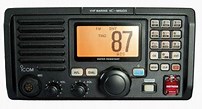
M602
Base Marine Radio
Radio discontinued by ICOM
This model is NO LONGER available see M604
accessories still available
for use with option remote command microphone, HM-157,
IC-M602 Features:
* New compact 4" tall flush mount design
* Accepts up to 2 optional, fully integrated COMMANDMICs®
* Allows up to 3 intercom points on board
* Like having 3 radio stations on board
* COMMANDMIC® operates most radio features, except DSC and Hailer mode
* Each COMMANDMIC® is JIS-7 waterproof (submersible)
* IC-M602 also offers waterproof (submersible) JIS-7 construction (minus connection cables)
* Three year warranty
* Built-in ITU class-D Digital Selective Calling (DSC)
* The 'M602 keeps a continual watch on the emergency ch70 channel even as you use a separate channel to talk on
* DSC uses same antenna as regular VHF communications -- one antenna does it all
* access DSC functions via the full key pad
* NMEA input-output jack on back panel
* Plug and play operation when connected to many third party GPS units
* All International, USA and Canadian channels, plus weather channels with alert function available. (USA version only)
* Full backlit key pad for direct channel entry and easy access of all radio functions
* Backlit display and keys, with 7 adjustable lighting levels
* Built-in hailer -- 22 Watts is most powerful on the market
* Built-in foghorn with 4 selectable patterns
* Supplied smart-style remote control mic disconnects from the front panel for easy installation.
* Convenient one-touch "TAG" scanning selection with simple add/delete
* Instant access to Ch 16 and Ch 9 (or Call channel)
* Dual/Tri watch
* Optional voice scrambler for communications privacy
* Available in black or white
This model is NO LONGER available see M506
_______________________________________________
ABOVE PRICE INCLUDES:
Radio, power cable, and mounting
hardware
___________________________________________________________
Other ICOM marine radios available:
ICOM M25 ICOM M36 ICOM M37 ICOM M85
ICOM M424G ICOM M506, ICOM M605 ICOM M802
___________________________________________________________
Email me for your FREE owners manual, to see if this is the radio you need.
Ask Me Radio questions, even if you did not buy it from me
or Order equipment by calling me:
Phone Fax or Email delcomindustries@yahoo.com
Equipment prices subject to change at any time without notice!
I take
 or PAYPAL